You have an alarm system. You have cameras. Maybe you upgraded to smart locks last year, added a video doorbell, integrated everything into an app on your phone. You get notifications when someone walks up your driveway. You can watch your front door from a hotel room in another time zone.
You feel covered. And to a point, you are. But covered and secure are not the same thing.
I have spent twenty years in federal criminal investigation and executive protection. I have walked through homes that had six-figure security installations and gaps you could drive a truck through. I have assessed residences where the owner could pull up twelve camera feeds on a tablet but could not tell me what time the landscaping crew arrives on Thursdays, or that the service gate on the east side has been unlocked since the pool contractor left it open in November.
The gap is never the equipment. The gap is the assumption that equipment is enough.
What Your System Actually Does
An alarm system detects a breach and sends a signal to a monitoring center. Someone receives the alert, verifies it, and dispatches police. That chain, from sensor trip to a patrol car on your street, takes time. In most American cities, average police response to a residential burglar alarm runs between seven and ten minutes. In suburban and rural areas, longer. Much longer.
Now consider the other number. The average residential break-in lasts between eight and twelve minutes. Entry to exit.
Your alarm system's entire value proposition operates on a timeline that frequently does not beat the event itself. This is not a failure of the technology. It detects and it notifies. That is one function in a security architecture that requires several.
Cameras do something similar. They record. That footage has value after the fact. It helps investigators. What it does not do is intervene. A visible camera might deter an opportunist. It will not deter someone who has done reconnaissance on your property, identified your patterns, and chosen your home deliberately.
Most residential security stacks are built almost entirely around detection. Sensors, cameras, monitoring. They are excellent at telling you what happened. They are largely absent from the question of why your home was selected in the first place. That question is the one that matters most, and almost nobody asks it.
The Vulnerability Surface You Cannot See on a Camera Feed
When an executive protection team secures a residence, we do not start with the alarm panel. We start with the environment. Approach routes. Sight lines. Behavioral patterns. The question is not "where should we put cameras." The question is "what makes this property attractive to a threat, and what makes it hard."
Homeowners think in products. Which camera. Which lock. Which service plan. They are solving a technology problem. The actual problem is architectural, and most of it is human.
Your daily routines are visible to anyone paying attention, and "anyone paying attention" does not require sophisticated surveillance. It requires a person in a parked car for three mornings. Your social media tells a stranger more than you realize: not just the vacation post, but the location tags, the school pickup photos, the shot of the new watch or the art on the living room wall. These are inventory lists published to an audience you do not control.
Then there is the property itself. The mature landscaping that gives your home its curb appeal also creates concealment. The hedges block sight lines. The lighting has gaps you have never noticed: sides of the house, transition zones, utility access points. Darkness is concealment, and a camera covering a dark corridor is a camera recording darkness. And every service provider who enters your property regularly (the cleaning crew, the lawn service, the delivery drivers) learns something about your home, your schedule, and your patterns. Information disperses outward through channels you have not considered and cannot monitor with a camera.
"I once assessed a home where the owner had invested over forty thousand dollars in a security system. Cameras everywhere. Hardened entry points. Monitored alarm with cellular backup. The housekeeper had been letting her boyfriend use the pool house on Thursdays while the family was out. He had a key to the service entrance. No camera covered that door."
Donato Poveda — Scopos Strategies
That is the gap. Not a technology failure. A methodology failure. The system was designed to monitor the home. No one designed a system to assess it.
The Difference Between Monitoring and Assessment
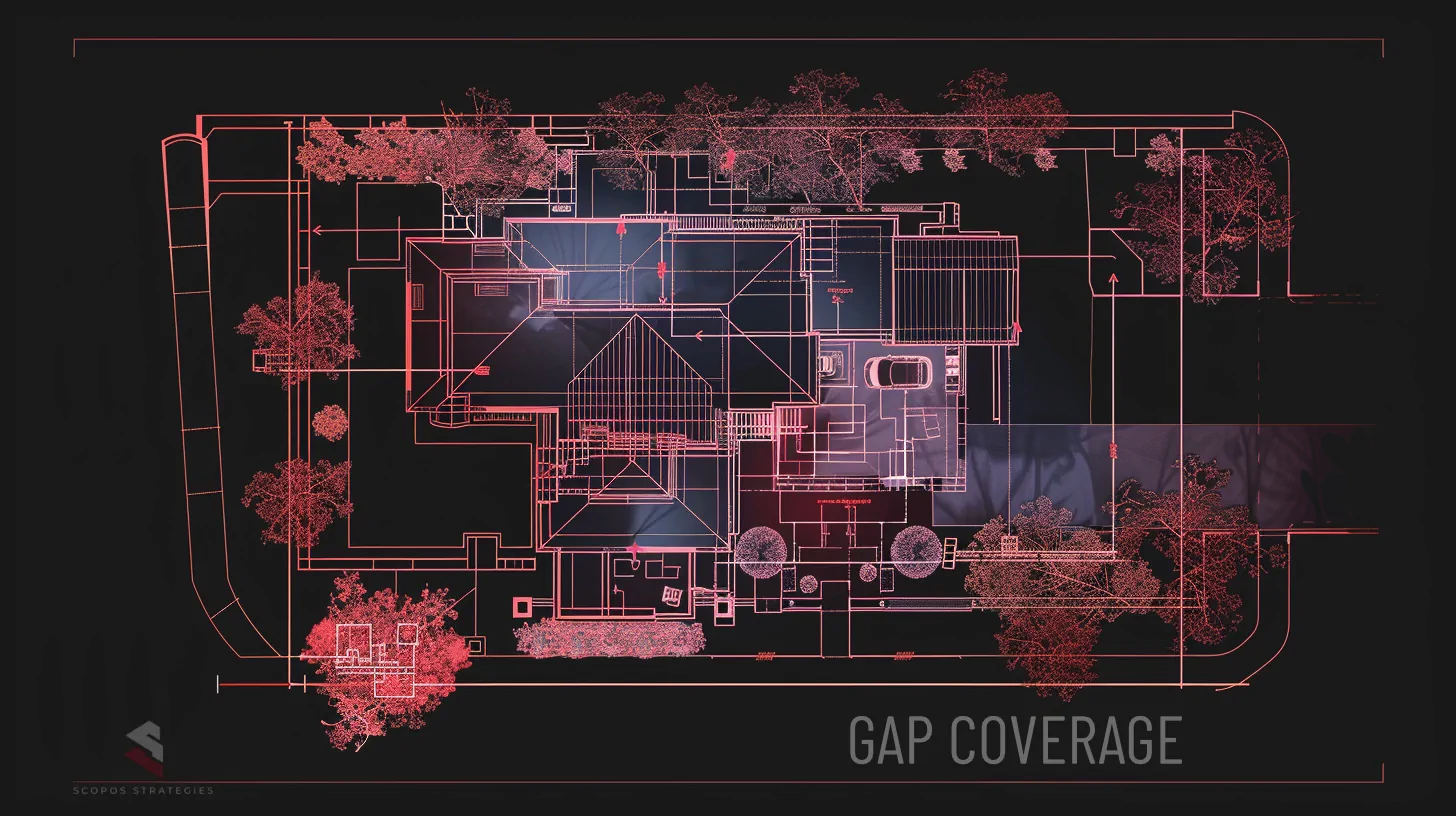
When I secure a residence professionally, the camera placement is one of the last conversations. The first conversations are about the threat environment, the physical property, and the patterns of the household: area crime data, approach routes, sight lines, entry points, landscaping, lighting, schedules, staff access, social media exposure. All of it mapped not as a homeowner sees it, but as someone planning unauthorized entry would see it.
Only after that do we talk about technology. And at that point, the decisions are surgical. Cameras go where the assessment identified blind spots, not where the installer's template suggested. Sensors cover the entry points that are actually vulnerable, not just the ones that are obvious. The system is designed around the specific risk profile of that property, that household, that environment.
This is the difference between buying a security product and having a security posture. One is a purchase. The other is a methodology. Most homeowners have the purchase. Very few have the methodology.
Closing the Gap
You can start looking at your own property with sharper eyes. Walk it at night, think about what a stranger sees, ask yourself how predictable your household looks from the outside. That awareness has value. But there is a reason this kind of assessment exists as a professional discipline. A trained eye reads a property differently than the person who lives in it. The vulnerabilities that matter most are the ones you have normalized because you see them every day.
This is not about fear. Nobody should live in their home like it is a forward operating base. This is about the gap between what you think your security posture is and what it actually is. That gap exists in virtually every home I have ever assessed, and it is almost never where the homeowner expected it to be.
Your alarm system is fine. Your cameras are fine. They are doing what they were designed to do. The question is whether what they were designed to do is sufficient for your actual risk profile, and whether the layers that technology cannot provide are present at all.
Find Out What Your Security Is Actually Missing
The IRRA℠ — Individual Residential Risk Assessment — applies the same layered methodology described in this article: physical, behavioral, environmental, and area intelligence, specific to your property and your patterns. It is free. It takes ten minutes. And it will change the way you look at your own front door.
Take the IRRA℠ Assessment